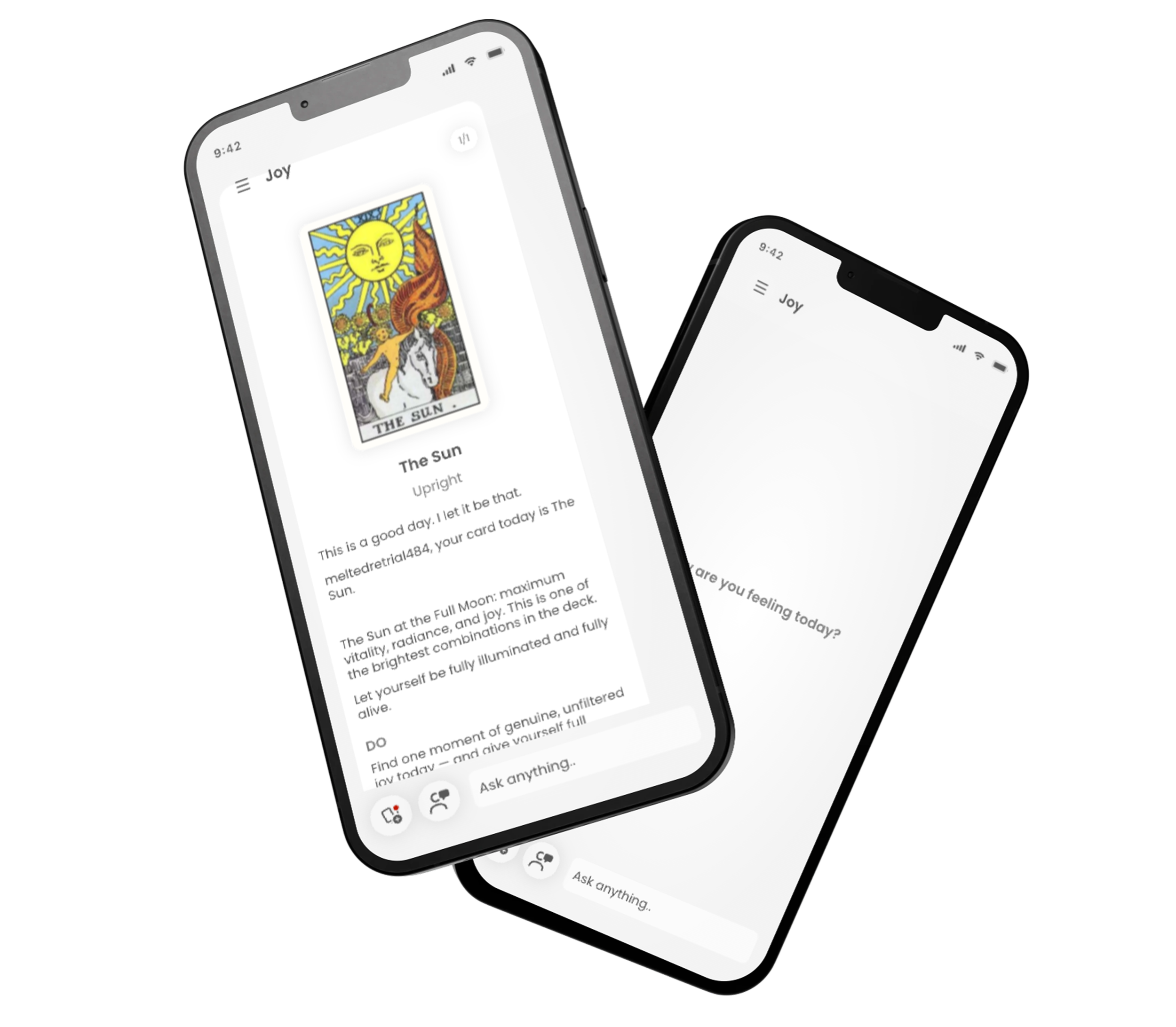
Overview
Designing a belief-first emotional support experience that speaks in the language of the universe — not a clinical chatbot.
Problem
Emotional support shouldn't feel like a form
Millions of people turn to Tarot cards and astrology not because they believe the stars control them, but because these belief systems offer a language for processing emotions. They provide structure, ritual, and a sense that there's meaning in the chaos.
Yet when people seek emotional support digitally, they face a cold choice: expensive therapy they can't always access, or apps that feel sterile and clinical. Neither speaks their language.
"I don't need a therapist to validate my anxiety. I need something that meets me where I already am"
— User interview participant
The opportunity: build an AI companion that uses astrology and Tarot as the emotional framework — a guide that feels like it knows you through the universe's lens, not a personality test.
Research
I conducted qualitative interviews with women aged 25–40 who identified as regular Tarot or astrology practitioners. Three patterns shaped every design decision.
Judgment is the #1 fear
"I don't tell my friends I pull cards before big decisions." They needed a safe, private space to be honest about how they were actually feeling.
Language shapes trust
When responses used astrology vocabulary — placements, transits, the energy of the moment — users felt deeply understood. Generic responses broke the spell instantly.
Emotional state varies wildly
Some days users want deep reflection. Other days they just need a 2-minute check-in. The companion had to flex without feeling inconsistent.
My Role
Solo Product Designer (0→1)
ScopeTeam
4 Engineers · 1 QA
Timeline
2026–Ongoing
Design Decisions
Visual language — soft, spiritual, never clinical
Soft lavender and warm cream replaced the typical mental wellness palette of teal and white.
Conversation design — structure hidden inside empathy
Every response pattern was engineered to validate before it informed. Joy always acknowledged the emotional state first, then offered perspective through the belief system lens. This order was non-negotiable — switching it made users feel analyzed, not heard.
Core Features
Personalized birth chart
Onboarding collects birthday, birth time, and location to generate a real natal chart — the foundation of every conversation Joy has.
Daily reading
Each morning, Joy draws from Tarot and current astrological transits to offer a personalized reflection prompt tailored to the user's chart.
Full card spread readings
Users choose from 3, 5, 7, or 9-card spreads for progressively deeper insight into relationships, decisions, and energy.
Project Walking through
Five screens that define the core journey — from the moment a user opens the app to reviewing the full meaning of their spread.
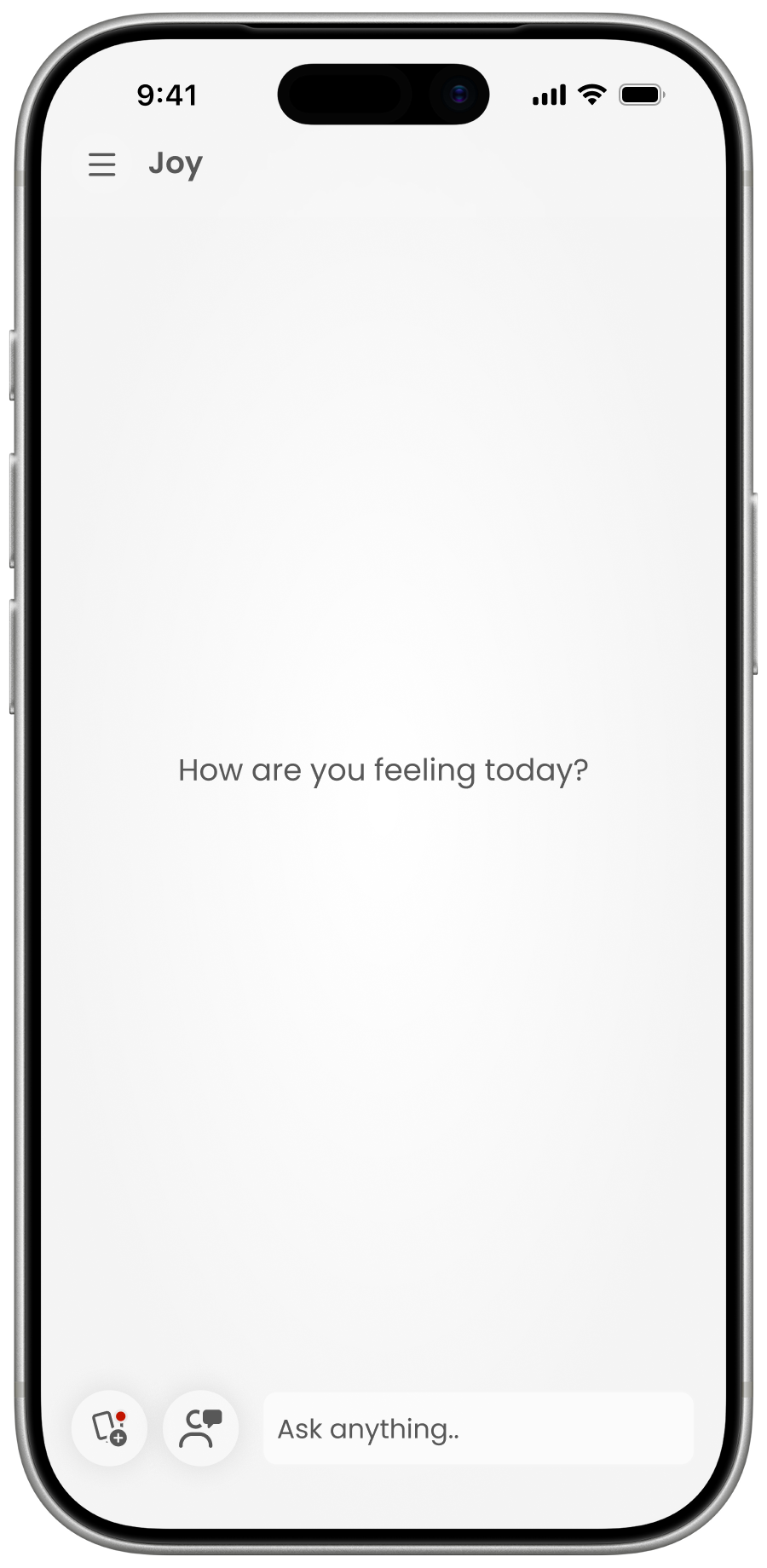
Where every session begins
Joy opens with a single, unhurried question — "How are you feeling today?" — before any structure is introduced. There are no forms, no categories, no prompts to navigate. The tone signals that this is a space to exhale, not a checklist to complete. Users can type freely or simply sit with the question.
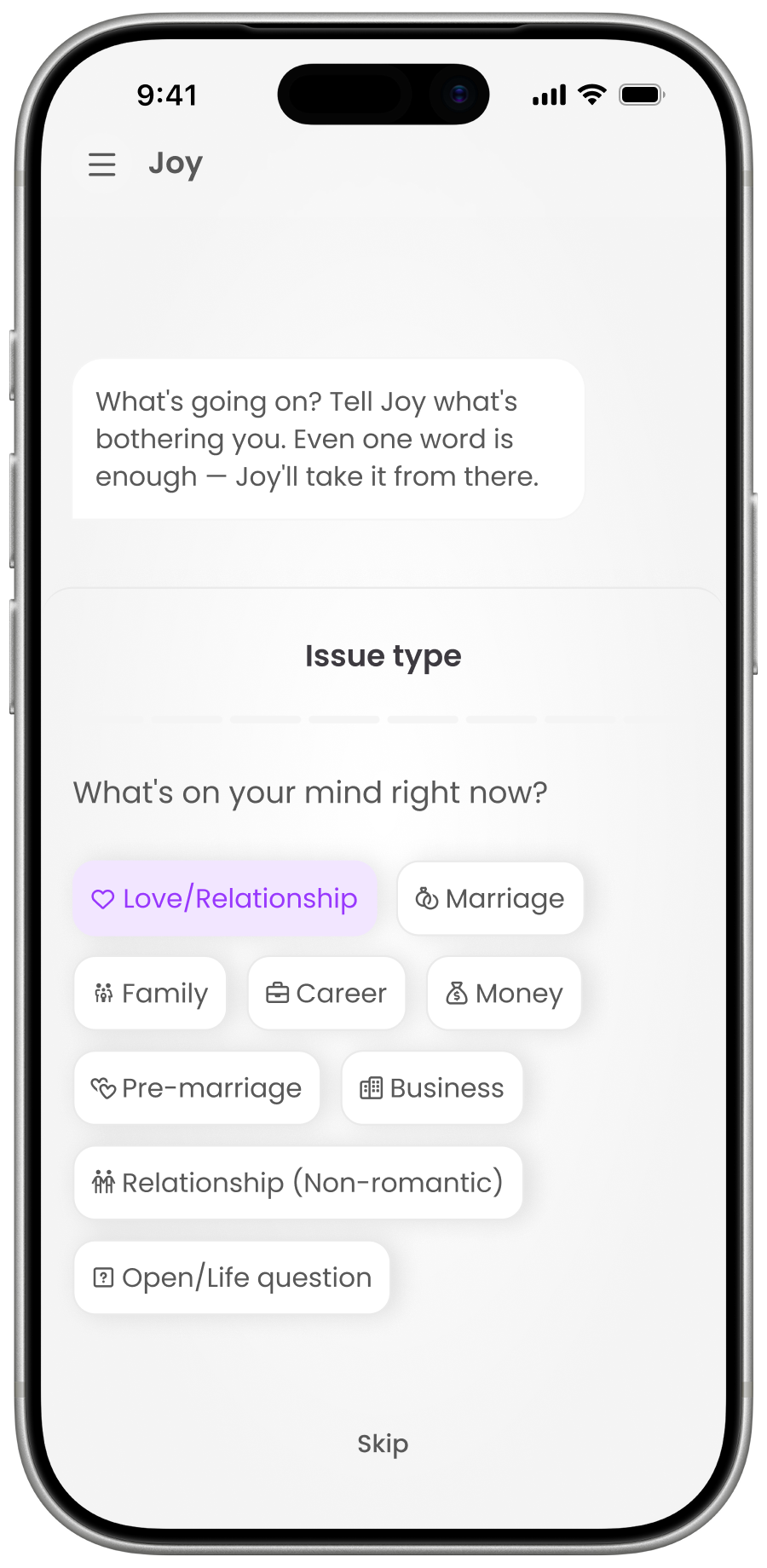
Narrowing to what matters
Before drawing cards, Joy quietly gathers context. Users select an issue type — Love, Career, Family, Money, and more — so Joy can interpret the spread through the specific lens of what's weighing on them. This single step transforms the reading from generic to genuinely personal, without asking the user to explain themselves in full sentences.
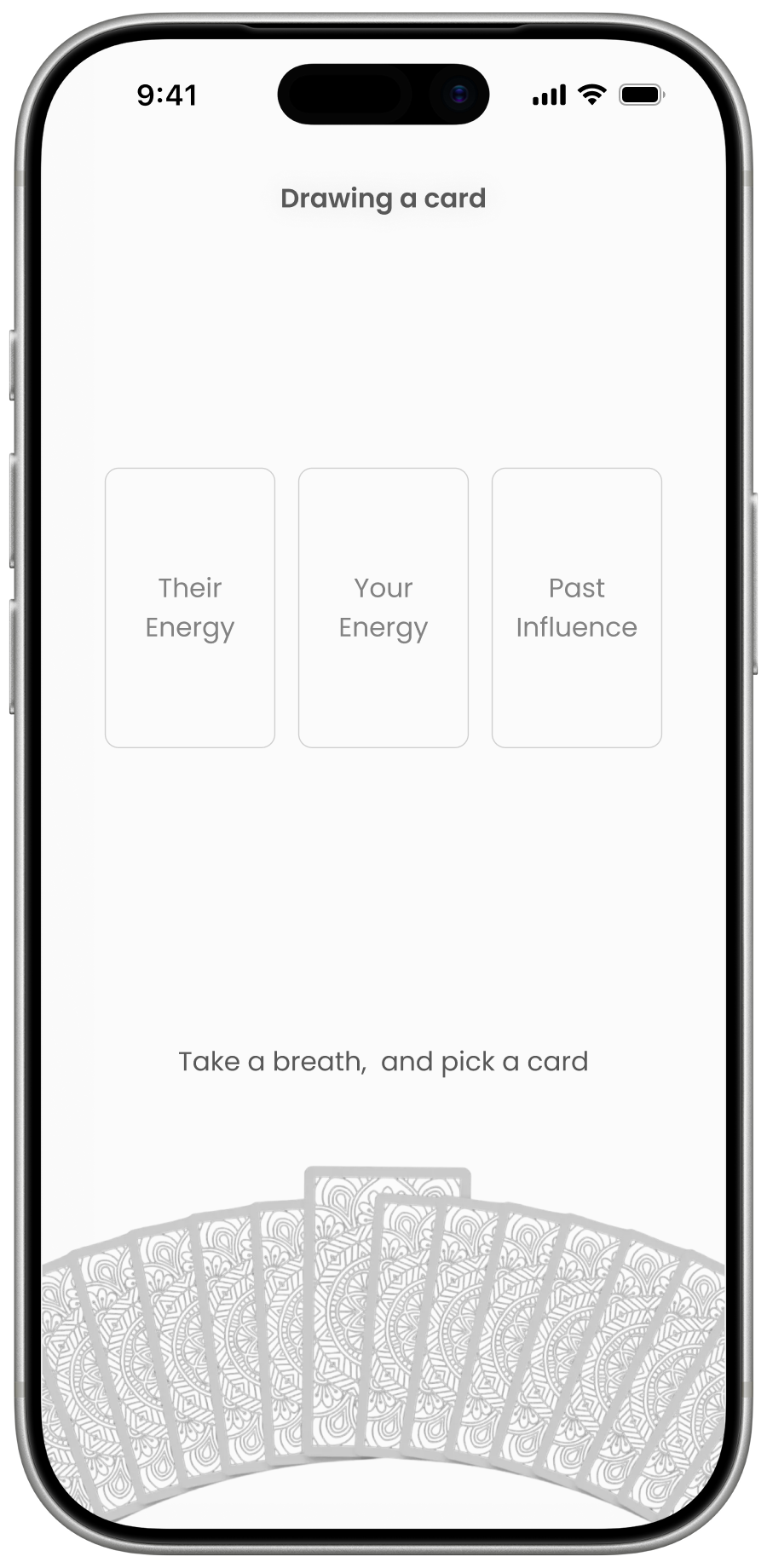
The moment of choosing
After selecting a spread size, the user is presented with a fanned deck and a single instruction: "Take a breath, and pick a card." The pause is intentional — it shifts the user out of browsing mode and into a moment of reflection before the reading begins. The act of drawing becomes part of the ritual.
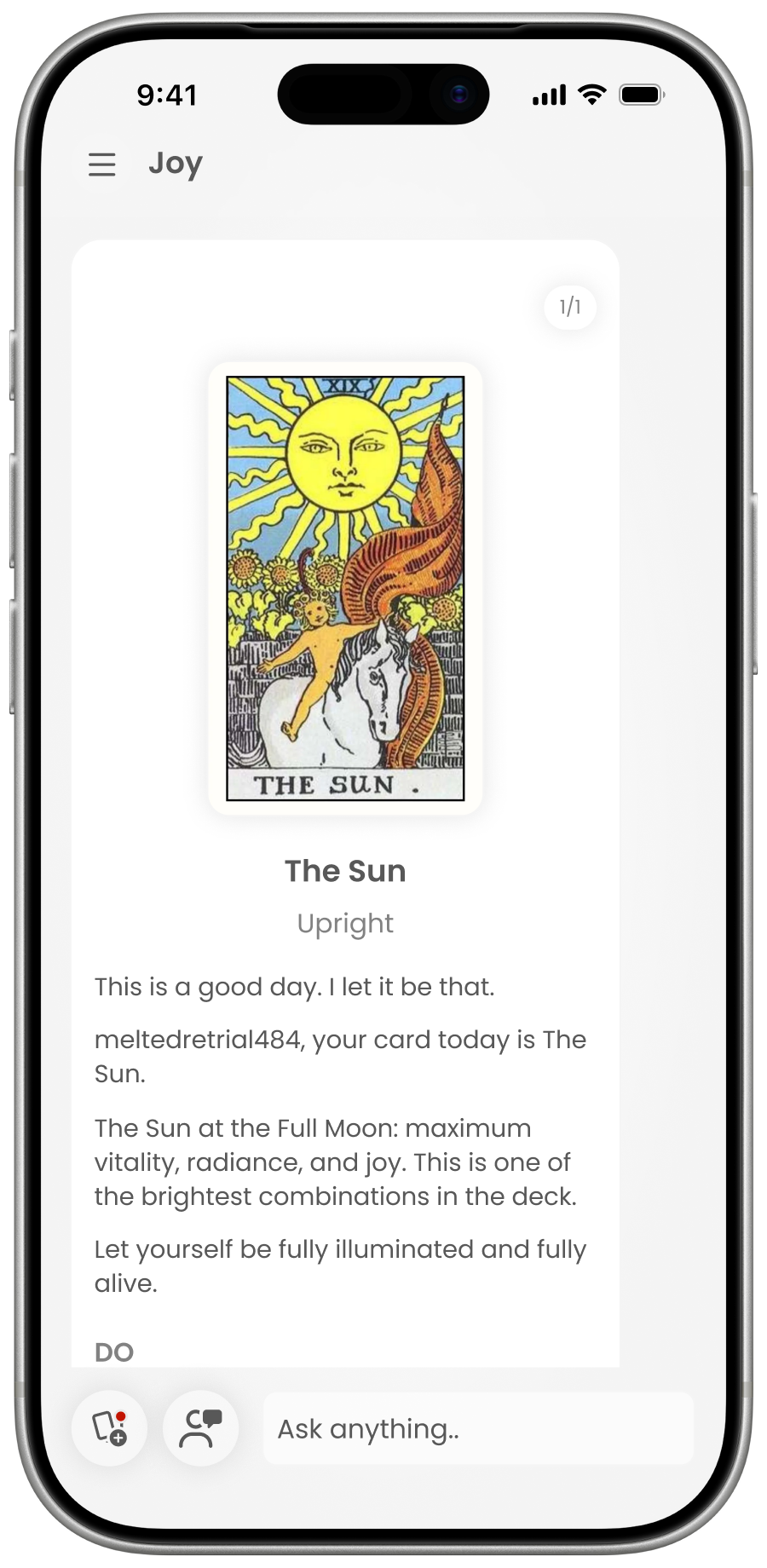
A reading written for you
Once a card is drawn, Joy delivers an interpretation that weaves together the card's meaning, the user's current lunar phase, and their personal astrological context. It reads like a message written specifically for them — not a definition pulled from a reference book. The personalization is what makes it land.
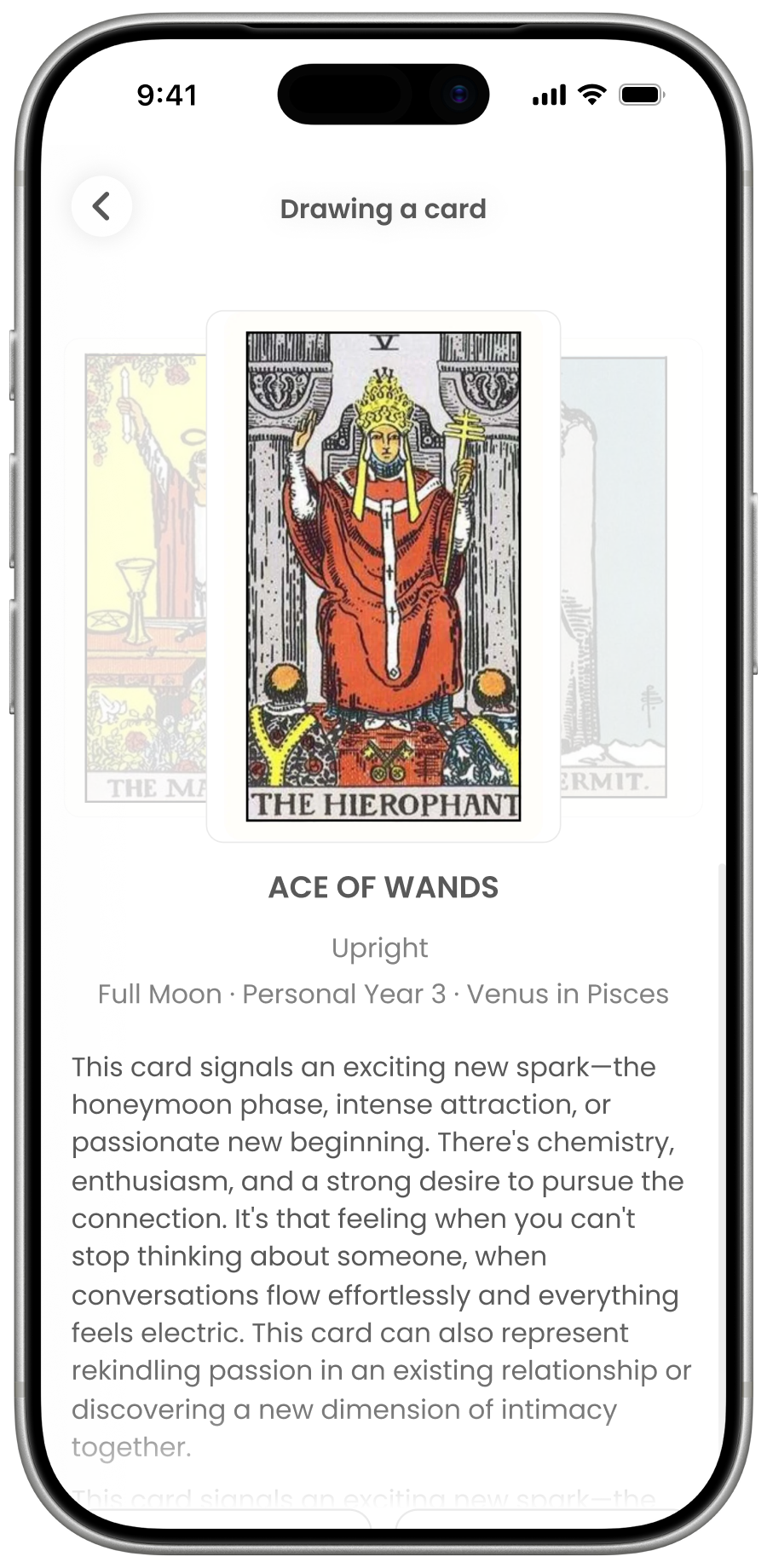
Sitting with the full picture
Once all cards are drawn, users can swipe through the complete spread at their own pace. Each card sits in its named position, and as the user moves between them, the interpretation updates below. The design encourages users to absorb each position's meaning before moving on — it's a reflection tool, not a results page.
Ethical Consideration - The dependency question
Designing an emotional companion means grappling with a real tension: what happens when Joy becomes a crutch?
I made two explicit design decisions to address this. First, Joy actively encourages journaling and reflection as practices the user owns, not reliance on Joy for answers. Second, if a user expresses distress beyond the scope of a wellness app, Joy gently acknowledges limits and surfaces professional resources.
Healthy attachment
Joy is designed as a mirror, not a crutch. Reflective prompts redirect insight back to the user.
Graceful limits
When conversations signal genuine distress, Joy acknowledges its limits and offers a path to professional support.
Reflection
What I'd do differently
Joy taught me that the hardest part of designing for emotional wellness isn't the UI, it's the conversation architecture. Every word choice, every moment of silence, every decision about when Joy speaks vs. when she asks carries emotional weight. I'd invest even more time earlier in the project on conversation design testing before visual design, because the tone shapes everything downstream.